Monday, May 9, 2011

Obama on Osama

President Obama’s remarks on the death of Osama bin Laden had moments of greatness and moments of failure.1 His opening was incredible. His description of the crimes committed the morning of September 11, the numbers who died, and the heroism and patriotism shown by the American people set up the United States with the ethos necessary to justify and react exultantly to bin Laden’s death. He reached out poignantly to the families of the victims, speaking of “The empty seat at the dinner table…a gaping hole in our hearts.” He then returned to the greatness of America through our response on the home-front and our reaction against al Qaeda. He praised the courage, dedication, and effectiveness of our military and intelligence service.

Through this message, President Obama firmly established America on the moral high ground in our pursuit and killing of bin Laden and in our fight against Islamic terrorism globally. While this ethos may seem obvious, criticism has already been building across Europe at the handling of the War on Terror in general and the killing of Osama bin Laden in particular. Figures such as the Archbishop of Canterbury have publically stated that the U.S. erred in killing bin Laden.2 The recitation of the strengths and virtues of the American citizenry when contrasted with the dastardly and cowardly attack against civilians of this fundamentalist Islamic terrorist should make such criticisms laughable at best.

President Obama’s reinforcement of President Bush’s message that we are not at war against Islam was also appropriate. To have failed to communicate that the U.S. has nothing against Muslims willing to live peaceable would have run the risk of alienating them and pushing them into the fundamentalist camp. His affirmation of our Pakistani allies was crucial for the same reason. He made a glaring error, however, when he claimed “Bin Laden was not a Muslim leader.” The mass protests throughout the Muslim world beg to differ. Even in England, a mock funeral and protests were held in front of the U.S. embassy.3 His attempt to deny the impulse behind bin Laden’s actions failed and could only lead to questions regarding his intentions.

Closing with a call to continued action in the defense of the nation and thanks to the military, intelligence, and counterintelligence professionals, President Obama ended on an upbeat note. He reinforced the nation’s dedication to pursuing justice for the victims of the 9-11 attacks and their families. He returned to the ethos of America in his closing lines, arguing that America is justified in this endeavor because of the liberty and justice it attempts to uphold.

President Obama’s reinforcement of America’s ethos and moral high ground is vital in a world highly critical of every action we take. The international head-scratching and outright rage at our killing of bin Laden demonstrate the importance of this justification. His reinforcement of Bush’s stance against terrorism was reassuring. His attempt to erase Osama bin Laden’s status within the fundamentalist Islamic movement, however, was troubling and destroyed much of his message’s strength.

1. Obama's Speech

2. Canterbury on Killing Osama

3. Protests

Thursday, April 28, 2011

For Quiet Confidence.

(This prayer comes from the 1928 American Book of Common Prayer)


O GOD of peace, who hast taught us that in returning and rest we shall be saved, in quietness and in confidence shall be our strength; By the might of thy Spirit lift us, we pray thee, to thy presence, where we may be still and know that thou art God; through Jesus Christ our Lord.
Amen.

I found this prayer to be convicting, particularly taken in connection with our weekly wing chapel reading of Thomas a Kempis' The Imitation of Christ. As a Christian living in the modern world, and particularly as a college student, finding time for quietness and solitude is itself a grueling process. Balancing eighteen credits and
seventeen hours of work a week while trying to deepen friendships with a few close friends leaves little time to be alone. Yet it is often when I am alone that I am best able to search out my mind and heart and try to conform them to the image of Christ.

Something that I have found extremely helpful to finding this solitude is the Book of Common Prayer and the wisdom and truth it contains. The prayers often seem perfectly fitted to guide my soul back from the dizzying swirl of life
into a closer alignment with its anchor, the Lord Jesus Christ. I have found that by pushing evening prayers to the very last thing I do and making morning prayers the first activity I engage in upon waking I am able to find this time of solitude and realigning.

One thing that I have really begun to appreciate through the use of the Book of Common Prayer and attending (though only once so far) the Church of Our Savior - Oatlands is the Christocentrism of the Anglican faith. Having grown up in more Baptist circles, I had been more inclined to think of God most often as the Trinity. While God does exist as the Trinity, thinking of Him primarily in that way can lead to a sort of abstraction of the Divine (at least it did for me). Taking a course in Metaphysics last fall and this new found wisdom in the Book of Common Prayer has lead me to a much deeper and fuller understanding and appreciation for Christ as part of the Godhead.

This new focus has been incredibly beneficial to my spiritual life as having a clearer understanding of who Christ is enables me to attempt to conform to him in a more effective manner. One of the most fascinating aspects of this for me is that in reading seemingly not at all connected to my conforming to Christ - reading Sartre for example -my initial reaction was not a logical analysis of the argument of the work, but rather an attempt to see how it conformed to "the mind of Christ." This bringing all things in subjection to Christ should not have been new to me, but the lack of having a Christocentric theology made this unclear.

I encourage you to focus on Christ. Christ is our Savior, our Brother, our Advocate, and our Example. We are to strive to conform to His image. Combine this Christocentrism with large (as a college student as large as you can) amounts of solitude, reflection, and soul realignment - it will bless you beyond measure. Though this may seem trite, do not let the busyness of life deter you on this track, you have no idea what you are missing.

Wednesday, April 6, 2011

Reflections on Revolution

'Religicide' in Iraq an article published by Christianity Today details the persecution that formerly protected Christians are now facing in the newly democratic Iraq. "Just before the 2003 war, Christians made up some 1 million of Iraq's then-25 million citizens. Saddam Hussein viewed Christians as "peace-loving" and largely protected the historic community." Now "a large percent-age of Iraq's ancient Christian population have fled their conflict-ridden country. Many fear that Iraq's centuries-old Christian community is on the verge of extinction." Large numbers of Christians have lived in the region since the days of the early church; now they are fleeing en masse. Exit Visa: Iraqi Christians Look for Safe Haven, also by Christianity Today, details the increasing number of Iraqi Christian refugees and the problems they face both in Iraq and in their attempts to find a new home. The establishment of democracy in Iraq has not been good for these Christians; minorities play an important role in dictatorships as they can help to dilute and diffuse opposition to the dictator. As such they are often protected. Before the U.S. establishes democracy by fiat, or before we welcome "democratic" revolutions especially in Islamic countries, we ought to consider the toll they will take on oppressed minorities and, if nothing else, do our best to assist and protect them.

But this ill-treatment is not limited to religious minorities. Dr. David Aikman, formerly an international correspondent for TIME magazine, details the persecution facing women in these Islamic countries in his American Roundtable article: Arab Unrest and the Status of Women. This can be seen clearly in the treatment given to western female correspondents by the Egyptian revolutionaries; they have been repeatedly groped and sexually assaulted. Aikman points out that the problem is societal and cultural, not merely political - in the Czech Republic the revolutionaries made a conscious decision not to behave like the Communists in their treatment of them. This has not been the case in the Egyptian revolution. As Aikman notes, "
When Egyptian women protested in Cairo's Tahrir Square for better political and human rights for women, they were outnumbered and shouted down by belligerent men. Oh, and a statistic worth knowing -- especially for women tourists to Egypt -- is that 93 percent of Egyptian women report having been manhandled in public settings; and 98 percent -- can you imagine, 98 percent? -- of foreign women have reported the same thing in Egypt." The situation in Libya appears to be similar. Aikman ends his article with a sobering analysis of the state of democracy in such nations: "if half the entire population is being abused by the other half, what hope is there for the benefits of democratic rule?"

Post-Mubarak Egypt has Islamists calling for modesty police, an article in the Jerusalem Post, details some of these abuses perpetrated by the new regimes and revolutionaries. Muslim mystics, who are not supported by mainstream Islamists, are being killed in Egypt. Calls for the institution of a Saudi Arabia-esque modesty police force have Egypts secular political leaders worried about the establishment of an Islamic regime.Sa'id Abd Al-Azim, a leader of the salafi movement in Alexandria, said "If the Christians want safety they should submit to the rule of God and be confident that the Islamic sharia [law] will protect them" The head attorney of the Egyptian Union of Human Rights, a Coptic Christian, claims the revolution has been taken over by radical Islamists. The article goes on to point out that "[in] Bahrain, unrest has evolved into a conflict between Sunni- and Shiite Muslims and the U.S. has pulled back from supporting Libyan rebels over concerns they are dominated by Islamists." One is forced to remember that the U.S. allowed a similar revolution in Iran.


These circumstances illustrate the folly of rejoicing at the creation of a democratic system without the inculcation of the democratic principles necessary for democracy's existence. These principles are found in true Christianity (the first major religion to treat women with dignity and honor). Better a dictatorial regime that limits the freedom of the press and assembly and uses its countries wealth for personal gain than a faux democratic system that allows, or even encourages, the murder of large numbers of its citizens and oppresses half the population in the name of religion.

Saturday, April 2, 2011

Countrymen, My Countrymen

(This poem is a reflection of my mood on November 6, 2008 and again on January 20th.)

Where has discernment gone, countrymen, my countrymen?
When will your eyes see your error, what you have done? When
“The days have gone down in the West … into shadow,”
And the world of men falls into chaos below?
What will you say when your world is no more,
You who have chosen to give up this war?
What will you do when they come to your door,
And there is no escape anymore?
Will you then take back this empty choice?
Why did you follow naught but a voice?
Why did you choose this, what were you offered?
How were you deceived by what was proffered?
And why was it so easy?

Where has your courage gone, countrymen, my countrymen?
When did battle become the choice that you feared most? When
Did freedom lose all to the dream of endless peace,
And the ever vain hope that all battles might cease?
“Is … peace so sweet as to be purchased at
The price of chains and slavery”, yes, that
Is the question left unasked. And hereat
We must never shrink from the just combat.
But how will your strength return again,
Once you are conquered what will remain?
Why did you lose heart, why did you give in?
What caused this cowardice to begin,
And can you be brave once more?

Where has your freedom gone, countrymen, my countrymen?
When did its value fade, what did they tell you, and when
Did they begin? How is it that what you held dear
And sacred and inviolable now you fear?
You could give it up without a tear!
How foolish your choice soon will appear.
What will you then do to change this doom?
Will you wait ‘till your land is a tomb,
And the “forgotten people” you become?
What then, what then will be reckoned the sum
Of the greatness that you lost?


Sunday, March 27, 2011

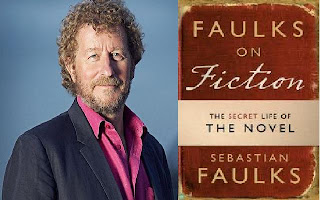
Faulks on Fiction - The Lover

The concept of the lover in literature went through significant change in the transition from the courtly love of Arthurian legend and other medieval works and Shakespeare’s poetic lovers to the lovers of the literary novel. In many ways, both good and bad, the lover has become more real, more human; along with this added realism, however, the problems of love also make their appearance. Sebastian Faulks dexterously elucidates the various concepts of the lover in the literary novel.

Faulks commences with Mr. Darcy – one of the most well known and beloved characters of all time. In the early 19th century, the concept of the lover was either that of a rake or of respectable husband material; Jane Austen fused elements of both character types in Mr. Darcy. Darcy is a respectable gentleman and will make a good husband, but he has character flaws that he must work out first. Darcy is rich, poised, good looking and snobby – all which recommend him as a husband: love is a means of social advancement. Darcy is, however, rude; a trait which distances him from many of the characters in Pride and Prejudice but gives him an intellectual connection point with Elizabeth. Like the medieval concept of courtly love, the love expected in Pride and Prejudice is worship and devotion. In the first half of the story, Darcy’s pride prevents him from truly understanding this worship and devotion that true love demands of him. In the first half of the book, the main passion between Elizabeth and Darcy is a sort of white-hot anger. Love is a means of change and betterment that is fully realized in marriage; the lover is one who may not be perfect, but who can change.

Emily Bronte’s Wuthering Heights introduces a troubling image of the lover. Heathcliff is ruled by his passionate love for Catherine. He shares Darcy’s snobbery and selfishness, but unlike Darcy never changes and has no restraint. Heathcliff never realizes that the worship and devotion he has toward Catherine needs to be translated into service; his love remains nothing but an overwhelming passion. Heathcliff’s love of Catherine goes beyond passion or lust, however, it is some sort of destructive idolatry. Heathcliff is unable to live without possessing Catherine’s soul. This idolatry destroys not only his life, but the lives of those around him.

Tess of the D’Urbervilles presents us with a new concept of the lover: an innocent and naïve farm-girl. Despite her innocence and simplicity, she commands the attention of all the men she passes. Tess encounters love for the first time at a country dance where she meets Angel Clare, but feels slighted when he leaves without dancing with her. Her naïveté is exploited by her employer Alec D’Uberville who rapes her. Tess begins a relationship with Alec, though he never marries her. She eventually returns home and gives birth to a son who dies after a few weeks. She is then reunited with Angel and they fall in love and are married; Tess did not tell Angel of her past until their wedding night, however, and in shock he deserts her. Tess eventually becomes Alec’s mistress. At the end of the book Tess murders Alec and runs off with Angel only to be caught and executed for her crime. In Tess of the D’Ubervilles the destructive power of love seen in Wuthering Heights is seen again. This novel also involves a good deal of sexual activity; strangely, this sexual activity seems to be divorced from love. In Tess, we see the lover as someone able to command the affection and lust of others, but also someone condemned to the problems that her love and physical attributes bring.

The complexities of sex and love are seen more clearly in Lawrence’s Lady Chatterley’s Lover. Lady Chatterley’s (Connie) disabled husband gives her permission to have a lover. After declining the suggestion for a time, Lady Chatterley takes up with her husband’s gamekeeper. Unlike Tess of the D’Ubervilles where illicit sex (desired or not) brings sorrow and destruction, Connie’s affair brings her happiness and satisfaction with her life. But the destructive nature of sinful passion can be seen in the relationship of Connie and the gamekeeper; their relationship rather than being based in love is based in mere sensuousness. This begins the extraction of love from the lover and the establishment of the lover as one who engages in sex.

This conception of the lover is seen clearly in The End of the Affair and its main character Maurice Bendrix. The problem of a sex-based relationship can be clearly seen in Maurice’s affair with the wife of a friend. He becomes increasingly jealous, unaware of the irony of being jealous of something that does not belong to him. He is snobbish and miserable. Unlike Tess who is oppressed by her surroundings and circumstances, the mainproblems facing Maurice come from within himself. As his affair progresses, so does his bitterness and jealousy; he becomes controlled by his passions and emotions. The unnatural state of his affair comes to a head when his lover thinks he has been killed by a bomb, repents, and promises God that she will be chaste if only his life is preserved. One is left with a feeling of despair.

Postmodernism’s effect on the concept of the lover can be seen in Doris Lessing’s 1962 novel, The Golden Notebook. The writer and main character, Anna Wulf, keeps five notebooks each containing different aspects of her life; this represents the fragmentation and isolation of postmodern existence. Anna is a divorcee, communist, and sexually liberated character. Despite her postmodernism and feminism, Anna maintains a somewhat romantic view of love; this view is often disappointed. Unlike Connie, however, she does not share the idea that love is found in one man. She becomes defined by the men with whom she has her affairs. Love, if it exists, could never be the uplifting and correcting influence seen in Pride and Prejudice. Anna attempts to bring order to her life by uniting her stories in one notebook, but her promiscuous life only brings chaos.

Nick Guest, in Alan Hollinghurst’s 2004 novel The Line of Beauty, is searching for love, but finds his only fulfillment in loveliness. He has a succession of lovers, but none of them are as in love with him as he is with them. He is more interested in the idea of love (and its beauty) than in real love itself. Nick rents a room in the family mansion of a millionaire MP in London who is the father of one of his friends. He sees himself as a valued member of their family, often claiming “they couldn’t get on without me.” The truth is, as one of his friends later points out, he could not get on without the family, or rather their opulent and beautiful home and lifestyle. This is a valid critique; Nick quest for loveliness and fine living pervades his very existence. Love becomes disconnected from personalities and becomes connected to beauty in the abstract. Love becomes aestheticism. In the end, he replaces love of people with love of beauty; Nick becomes almost toddler like in his quest for pretty things.

The problems facing love that were viewed as surmountable in novels like Pride and Prejudice have come to be seen as destructive to love itself. Passion, and its physical fulfillment, rather than love is therefore chosen. But passion and illicit sex bring with them their own unique problems; problems much more difficult to deal with than those facing love. Most damaging among those problems is the destruction of love itself.

Sunday, March 20, 2011

Snyder v. Phelps Supreme Court Ruling


The recent eight to one Supreme Court decision on the activities of the Westboro Baptist Church, Snyder v. Phelps, was not made on whether the church had the First Amendment right to engage in such activities. The decision of the court was on whether the First Amendment protects such activities from tort liability. The court held that even offensive and hurtful public speech is protected speech.

Justice Samuel Alito argued in his dissent that Westboro Baptist Church’s activities were directed against Matthew Snyder and his family as private figures and, as such, that their speech is not public speech. Based on this understanding of their actions, he argues that they can be sued for intentional infliction of emotional damage. He points out the strenuous nature of passing the test of “intentional infliction of emotional damage and argues that because the standard is strenuous that free speech is not substantially affected.” Alito recognized the modus operandi of Westboro Baptist Church is to use platforms such as funerals to gain media attention rather than using more logical platforms like government buildings.

The majority decision, however, correctly reached a different assessment of the facts. In the mind of the majority, the Westboro Baptist Church’s message, as heinous and offensive as it is, is public speech. Chief Justice John Roberts delivered the opinion of the eight member majority. He recognized that the message Westboro Baptist Church displayed is part of a longstanding protest of the policy of the United States military. This decision was correct in stating that the message of Westboro’s protestors was not directed primarily at the Snyder family but rather at the United States and its military in general.

Additionally, the Westboro protestors abided by the rules set for their protest by the town. They moved away from the funeral the required distance, and there is no evidence that they interfered with the funeral by anything more than their presence. Mr. Snyder, himself, admitted that he was only made aware of the protesters’ presence by watching a news broadcast at a later time. The court correctly recognized that choosing a particular platform in order to increase publicity does not transform public speech into private speech.

The actions of Westboro Baptist Church cannot be viewed with anything but the greatest distain. Their activities surely do cause extensive emotional harm to the families participating in the funerals. As a nation, however, we have time and again recognized that the right of free speech necessary to a free society deserves the highest protection the law can provide. As the message of Westboro Baptist Church does not call for nor incite illegal or dangerous activity, it must be protected. The effects of limiting free speech in this area would be vast and terrible. To establish precedent that speech on public and national issues that is offensive or emotionally damaging is subject to tort liability would place substantial limits on political and moral speech in this nation. For example, if a pastor was to preach on the Biblical messages about homosexuality, such a message would in all probability offend or cause emotional damage. Free speech is essential to ordered liberty and must be preserved even when that free speech causes offense.

Sunday, March 13, 2011

Faulks on Fiction - The Hero


In a new BBC series, author Sebastian Faulks examines various recurring character types in British fictional novels. The series contains four episodes detailing the character types of hero, lover, villain, and snob. Faulks begins with the hero. Like society in modern political philosophy, heroism in fiction usually takes the form of radical individualism.

Faulks begins with Robinson Crusoe. Crusoe, the hero, is a radically isolated individual. Interestingly, this isolation begins as a geographic isolation. Crusoe shares much the same morals and mentality of the “good” people of his time; indeed, unlike heroes in earlier literature, Crusoe is a very normal human being – he is not set apart by anything other than his isolation. His individualism is based in his ability to provide for himself. Crusoe provides both the physical and the emotional sustenance that he needs. His emotional struggle with his isolation is the conflict that defines him as a hero. While Friday improves his life, one is left thinking that Crusoe would have been fine had he lived alone to the end of his days. Crusoe is the master of his destiny.

What would this radically individualistic hero look like if placed in society? For that, Faulks turns to Tom Jones. Tom is not bound by the religion or morality of the time, but from his own moral compass usually acts in a commendable and generous fashion. His actions are based on feeling rather than thought and analysis. His heroicism comes from his common roguishness ratherthan from some moral or physical prowess. Tom realizes that he is in charge of his life and his misfortunes. He is viewed as a hero because he does what he wishes; in typical enlightenment optimism, this lifestyle is tempered with kindness toward the less fortunate. In Tom Jones, the hero is defined by his individual morality and control of his life. Jones displays the hypocrisy of the morally upright who would not recognize the plight of the poor. One can only say, “these ought ye to have done, and not to leave the other undone. (Luke 11:42)”

This hypocrisy is again touched on in Vanity Fair. The conflict of rich and poor is the conflict that defines Becky Sharp as a hero. She struggles against her social position in an effort to become wealthy, popular, and societally advanced Her ambition is, of course, focused on herself as an individual. She uses everyone around her in an attempt to better herself. “Vitality is more important than virtue.” This explains with Becky. She is utterly morally reprehensible, yet so interesting. She exchanges intelligence for Tom Jones benevolence.

In Sherlock Holmes, we return to the Tom Jones idea of a hero who benefits those around them. Holmes fights crime, but like Tom Jones is bound only by his individual morality. This morality has him work independently of the police, hide facts and evidence from them, and occasionally allow a criminal to escape. Faulks labels Holmes the novel’s first superhero. Holmes rises to heroism also in his mastery of science; it is this mastery that takes the place of Tom’s benevolence and Becky’s practical intelligence. Like both Tom and Becky, Holmes has his moral failings as well – particularly his drug addiction. More disturbing, however, is Holmes’ inability to be emotionally close to anyone. This radical isolation becomes a key part of the role of hero in modern literature. Holmes captured the public’s attention in a way few characters have ever managed; when Holmes died, large numbers of the British public went into mourning and Doyle was forced to resurrect him.

The grime, evil, and sadness of life seen in the London of Sherlock Holmes was mirrored in post-World War I and II fiction. Even the idea of the individual was shaken – man became merely a number, a statistic. This view of man fit well with the rise of totalitarian regimes. No longer is the hero an overcomer, one who flaunts the conventions of society; the hero becomes the subversive, the prisoner. The struggle is between the isolated individual and the overwhelming state. Rather than the glorification of individualism, the struggle to maintain one’s individualism becomes the defining conflict. This can be seen clearly in 1984 and the character of Winston Smith. The hero becomes the rebel. Though Winston Smith engages in immorality, it is not his flaunting of morality but his defiance of the state that makes him a hero. Eventually Winston is caught and forced to comply with the state. He is faced with his fears, but cannot overcome; he turns on his lover and compatriot. Heroism is no longer viewed as overcoming, but as struggling.

Though it eventually became clear that totalitarianism was not going to take over the world (at least not in a 1984 or Soviet Union sense), the disillusionment that began with World War I continued and manifested itself as boredom in the lives of everyday individuals. In the 1950s, this frustration was given vent in Lucky Jim and its hero Jim Dixon. Jim Dixon is a professor who is utterly bored with his life, with his job, and with the people he works and interacts with. Heroism is found in the struggle against this societal anomie through humor and sarcasm. Heroism is again subversive, but this subversiveness is of a humorous and childish type. What Jim is seeking for is authenticity in the sense that Heidegger or Sartre discusses it; his struggle is against fake or inauthentic existence. Jim seeks for this in the isolation and individualism of existential angst; his frustrations are best expressed as he talks to himself.

By the time we reach the 1984 novel, Money (the only novel discussed that I have not read), the hero is almost unrecognizable. John Self lives life completely subject to the passions of food, alcohol, sex, and entertainment. Unlike Tom Jones, he is not struggling against the morals of society – indeed there seems to be no struggle at all; unlike Tom Jones, he is neither gallant nor good hearted. This conception of the hero seems to follow on the heels of Jim Dixon. His heroism is his refusal to be bored with life; the excitement and activity of his life, his uninhibitedness, is what separates him from those around him. Even he cannot truly overcome; eventually he loses his money, his father, and even his own identity.

The character of the hero, at least in so-called literary novels, seems to follow the progression of man in philosophy. The hero as overcomer first struggled against his environment; in Tom Jones and Becky Sharp we see the hero’s struggle against economic conditions and social standing. In Sherlock Holmes the hero begins rejects societal standards. By the time we reach 1984, and reinforced in the character of Jim Dixon, the hero becomes a subversive; this subversive struggles against morality, society, and the government and usually loses. This dismal view of the hero reaches its culmination in John Self from Money who surrenders to all his lusts and eventually loses everything. The only thing that makes John self a hero is that he does what most of us are too inhibited (and rightly so) to do.

Faulks makes the dismal prediction that the hero in the literary novel is dead. He points to the rise of hero in genre and children’s novels, specifically mentioning Harry Potter. This re-emergence of the hero in other forms of the novel seems to hold out hope for the literary novel. If the writers of these literary novels can leave behind the failed philosophy of existentialism, perhaps the hero can live again. But when man is unsure of anything and his main struggle is his struggle for authentic existence, he is incapable of performing the hero’s part.